
Preparing for your baby’s first day at daycare brings a mix of emotions. At Little Newtons, we understand that learning how to label baby bottles for daycare in Maple Grove can feel overwhelming when you’re already juggling feeding schedules and drop-off times. Proper bottle labeling isn’t just about staying organized. It’s about your child’s safety and compliance with Minnesota regulations. Clear, accurate labels prevent mix-ups and help our staff deliver the individualized care every baby deserves. If you’re looking for child care in Maple Grove where staff understand these requirements, we’d love to tell you more about our approach.
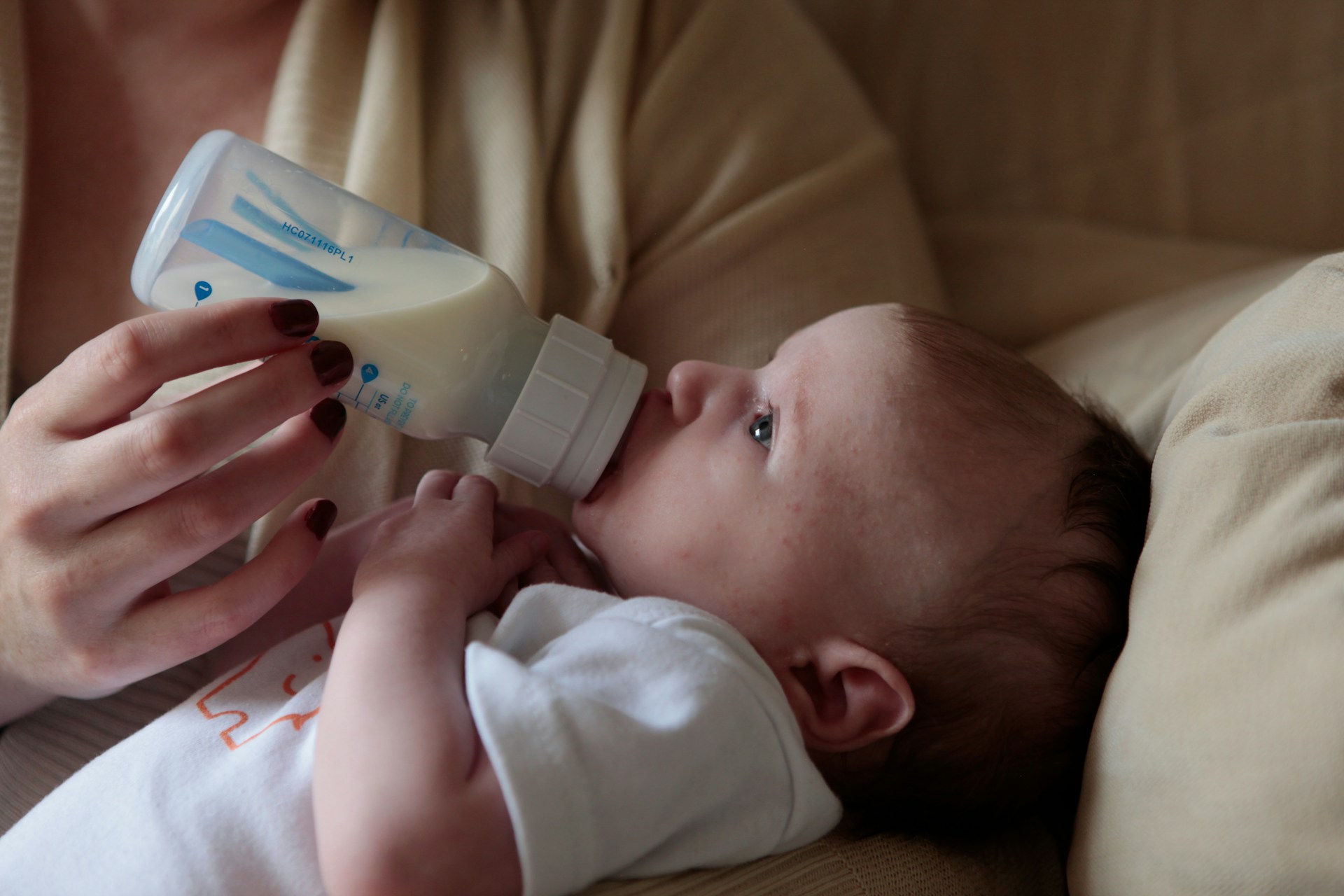
Minnesota child care centers operate under strict licensing regulations designed to protect your baby. Under Minnesota Rule 9503.0145, licensed child care centers must ensure every bottle is labeled with your child’s first and last name. This isn’t simply an organizational preference. It’s a legal requirement, and centers can refuse unlabeled bottles.
In a typical infant room, we often care for six to eight babies at once, each with their own feeding schedule, dietary needs, and potential allergies. A single unlabeled bottle creates confusion that could lead to a child receiving the wrong milk or formula. For babies with milk protein allergies or other sensitivities, that mix-up could trigger serious reactions.
Clear labeling helps us honor your specific instructions. When bottles display preparation dates, contents, and amounts, our staff can track feeding patterns, monitor intake, and communicate effectively with you at pickup.
Minnesota regulations and best practices establish clear standards for bottle labeling. At Little Newtons, we require these specific details:
Some facilities may have additional requirements based on their specific protocols. At Little Newtons, we’re always happy to answer questions about our labeling standards. Just call us at (763) 402-5239.
Choosing between permanent and temporary labeling solutions depends on your family’s routines, how many bottles you rotate, and whether you prefer convenience or long-term durability.
Permanent name labels deliver the most durable solution. These waterproof, dishwasher-safe labels withstand repeated washing cycles, sterilization, and temperature fluctuations bottles experience moving from refrigerators to bottle warmers throughout the day.
Quality permanent labels resist fading even after months of daily use. Parents who choose this option typically purchase enough labels to cover their entire bottle rotation (usually eight to twelve bottles) and apply them once. This upfront investment saves time since you’re not constantly replacing labels that peel or wash away.
Look for labels specifically designed for baby bottles rather than general-purpose stickers. These specialized products account for the curves and textures of different bottle brands. You’ll need a separate system for marking changing information like preparation dates and contents. Many parents combine permanent name labels with erasable markers or small write-on labels that can be updated daily.
Write-on and temporary labels offer flexibility for families managing multiple children or frequently changing bottle contents. These include masking tape with permanent marker, erasable label tape, or pre-printed temporary stickers designed for single-use application.
Temporary solutions work well when you need to update information frequently. Parents using both breast milk and formula, or those transitioning between the two, appreciate being able to completely relabel bottles as their baby’s needs change.
The trade-off comes in durability and time investment. Write-on labels require daily attention and may not survive dishwasher cycles or extended refrigeration as reliably as permanent options. For best results, apply them to clean, dry bottle surfaces and press firmly to ensure good adhesion.
Bottle design significantly impacts where and how you can effectively place labels. We’ve worked with virtually every major bottle brand through our infant care program, and one labeling approach doesn’t work for all bottle types.
Wide-neck bottles from brands like Tommee Tippee, Dr. Brown’s Wide Neck, and Comotomo offer generous surface area for labeling. The flat or gently curved sections around the bottle’s middle provide ideal placement for rectangular or circular labels.
Position labels where caregivers can read them while the bottle sits upright in refrigerators or on counters. Avoid placing labels too high near the collar where they might be covered by caps or bottle warmers, or too low where liquid levels obscure the text during feedings.
Wide-neck bottles typically accommodate larger labels that can include all required information in easily readable text. The silicone bodies of some wide-neck bottles present unique challenges for adhesion. If labels don’t stick well, try wrapping clear packing tape over the label, or consider silicone-compatible labels.
Standard bottles with narrower profiles require more strategic label placement. The cylindrical shape means you’ll need to choose between longer labels that wrap partway around the bottle or smaller labels with abbreviated information.
For glass bottles, labels generally stick more reliably to the smooth surface. Plastic bottles with textured grips or decorative patterns may need labels placed only on smooth panels. Test label adhesion on your specific bottles before committing to a large label order.
Specialty bottles like angled bottles or those with unique shapes sometimes limit labeling options. In these cases, labeling the bottle cap or collar might prove more practical than labeling the body. Just ensure the label method you choose meets your daycare’s visibility requirements.
Breast milk bottles demand extra attention because proper handling protects both the nutritional quality of your milk and your baby’s health. We follow stringent protocols for breast milk storage at Little Newtons, and accurate labeling forms the foundation of safe breast milk management.
Beyond the standard information required on all bottles, breast milk labels should include the date and time the milk was expressed. This detail helps us follow the “first in, first out” principle, using the oldest safe milk first to minimize waste. Fresh breast milk can be refrigerated for up to four days according to FDA guidelines, while properly frozen milk lasts considerably longer.
If you’re sending frozen breast milk, clearly mark bottles as “FROZEN” along with the freezing date. Never thaw breast milk in a microwave. This method creates hot spots that can burn your baby’s mouth and destroys valuable nutrients and antibodies. We thaw frozen milk by placing sealed bottles in warm water or leaving them in the refrigerator overnight.
Any breast milk remaining in a bottle after your baby has started drinking must be discarded within two hours. We can’t save partially consumed bottles for later feedings because bacteria from your baby’s mouth enters the milk during feeding. Clear labeling helps our staff track which bottles have been started and when they should be discarded.
The parents we work with consistently tell us that morning routines make or break their daycare experience. Establishing efficient bottle labeling systems transforms chaotic mornings into smooth, predictable routines.
Designating one time each week for batch bottle preparation eliminates daily labeling stress. Many parents complete this task Sunday evenings, setting themselves up for success throughout the week.
Start by washing and sterilizing your full bottle rotation, typically eight to twelve bottles depending on how many your baby uses daily. Once dry, apply permanent name labels to all bottles if you haven’t already. Prepare write-on labels for the week, pre-writing dates for each day or leaving them ready to complete quickly each morning.
Store prepared bottles in a designated area of your refrigerator or cabinet. This consistent storage location speeds up morning packing and helps you spot when you’re running low on clean bottles.
For bottle rotation, establish a simple system that ensures bottles cycle through regular use. Some parents use a “queue” system where clean bottles line up in order and you always grab from the front, replacing washed bottles at the back.
Managing bottle labeling for multiple children in daycare simultaneously can feel complex. Color-coding provides a visual shorthand that reduces errors and saves time.
Assign each child a specific color and use it consistently across all their daycare items: bottles, sippy cups, lunch containers, and bag tags. When preparing bottles in the early morning, reaching for your toddler’s blue labels and your infant’s pink labels becomes automatic.
Color-coded bottle caps or bands offer another layer of visual organization. This system proves especially valuable if siblings use the same bottle brand and size.
Minnesota licensing regulations don’t mandate daily re-dating of properly stored bottles. However, you should label bottles with the preparation or expression date so daycare staff can verify the milk remains within safe storage windows. Some facilities may have additional policies, so confirm your specific daycare’s requirements.
Minnesota child care centers have the authority to refuse unlabeled bottles. Without proper labeling, staff cannot safely administer the bottle to your child due to the risk of mix-ups. We recommend having a backup labeling solution in your diaper bag for emergency situations.
While permanent marker on bottles meets the basic requirement for name identification, it doesn’t provide an easy way to update changing information like dates and contents. Marker also tends to fade with repeated washing. Most parents find success combining permanent name labels with write-on labels for variable information.
Label storage bags before filling them to ensure the marker doesn’t break the seal. Include your child’s full name, expression date and time, volume, and “Breast Milk” designation. Write directly on the bag’s white label area using permanent marker.
Labels failing during washing usually indicate either incompatible label materials for your bottle type or insufficient adhesion time before washing. Choose waterproof labels designed specifically for baby bottles. Apply labels to completely clean and dry bottles, press firmly for 30 seconds, and allow 24 hours before the first wash for optimal adhesion. For problem bottles, wrapping clear packing tape over the label creates a protective barrier.
Preparing bottles properly represents just one aspect of helping your baby thrive in daycare. At Little Newtons in Maple Grove, we understand the details that matter to parents because we handle bottle feeding, labeling compliance, and infant care every single day. Our experienced staff creates nurturing environments where your baby feels secure while developing the skills that form a strong foundation for lifelong learning. If you’d like to learn more about our infant and toddler programs and how we support families through every transition, contact us today.
Photo by Lucy Wolski on Unsplash