
How We Teach Science to Our Preschoolers in Elmwood Park
Watch a three-year-old discover that ice melts in warm water, and you’ll see pure wonder light up their face. That moment of discovery drives our approach to science education at Little Newtons in Elmwood Park. Science is woven into every conversation, outdoor exploration, and question a child asks throughout their day with us.
Why Science Education Matters in the Preschool Years
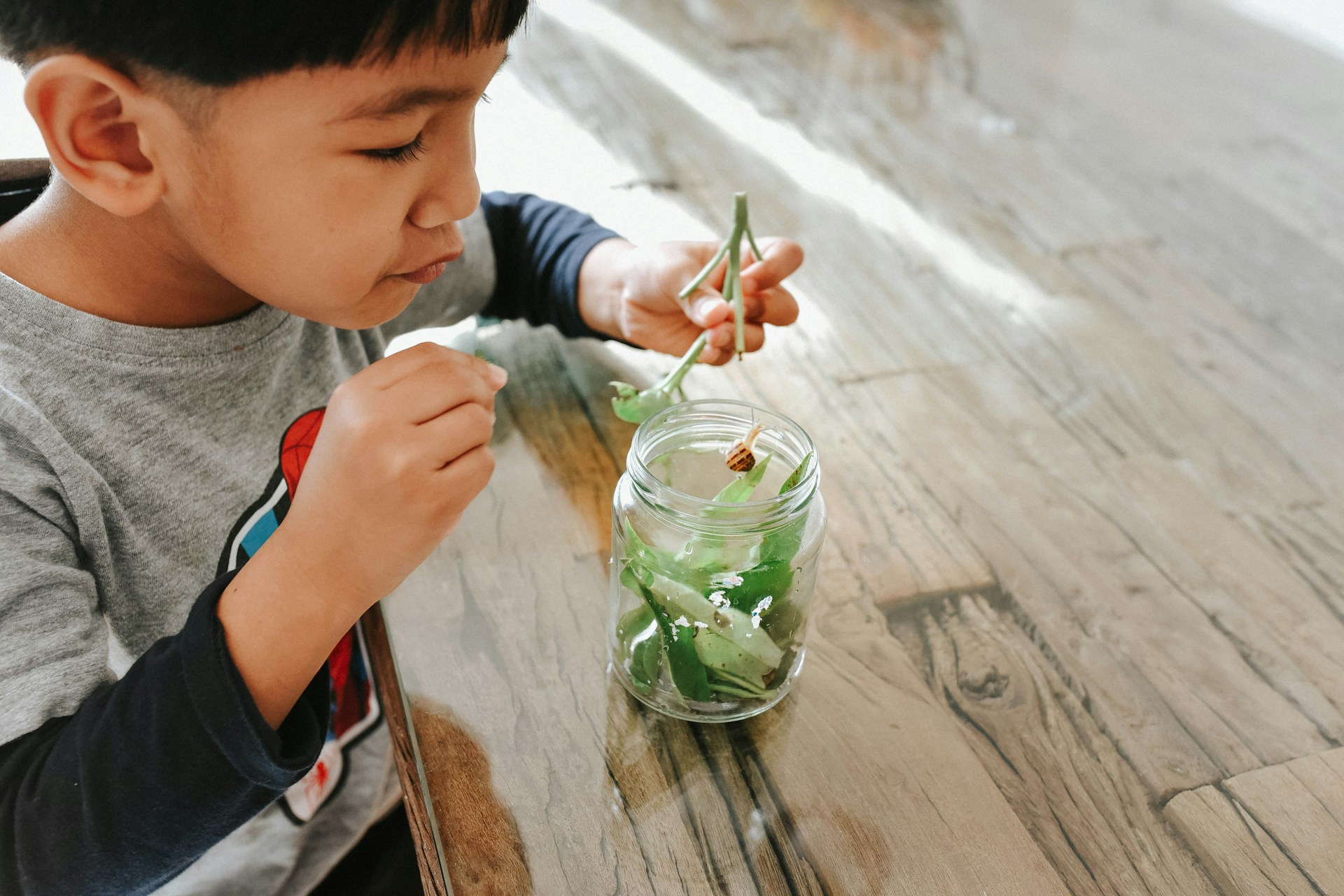
The preschool years create a critical window for developing scientific thinking. Between ages three and five, children’s brains form connections at an incredible rate, making this the ideal time to introduce foundational scientific concepts. Early exposure to science creates pathways for critical thinking and problem-solving that children will carry throughout their lives.
Science education during early childhood goes beyond memorizing facts. When children engage with scientific concepts, they develop observation skills that strengthen their ability to notice details in reading and math. They learn to form predictions, test ideas, and adjust their thinking based on evidence – skills that translate directly to literacy and numeracy.
During collaborative science activities, children practice communicating observations, listening to peers’ perspectives, and working together toward shared goals. These interactions build confidence and teach children that learning happens through both success and valuable experimentation. Ready to see how we bring this approach to life? Schedule a tour of our Elmwood Park childcare center.
The Power of Inquiry-Based Science Learning
Inquiry-based learning transforms children from passive receivers of information into active investigators. Rather than shutting down questions with quick answers, we channel that curiosity into structured exploration that teaches children how to find answers themselves.
This approach honors each child’s unique interests and developmental timeline. One child might spend weeks fascinated by how shadows change throughout the day, while another investigates why some objects float and others sink. Both children engage in authentic scientific inquiry, developing observation, prediction, and experimentation skills at their own pace.
What Inquiry-Based Learning Looks Like in Practice
Step into our Elmwood Park classrooms during science time, and you’ll find small groups gathered around water tables testing which materials absorb liquid, or lively discussions about why playdough balls roll faster down ramps than blocks. Teachers move between groups, asking open-ended questions that push thinking deeper without providing answers.
When a child notices that plants in the sunny window grow taller than those in shade, a teacher might ask, “What do you think causes that difference? How could we test your idea?” This encourages children to articulate observations and design simple experiments to explore their hypotheses.
Collaborative projects form another cornerstone of our approach. Children work together to build structures that can hold weight, create ramps at different angles, or care for classroom plants. These projects require negotiation, problem-solving, and shared decision-making, teaching children that science happens through community.
Creating a Culture of Wonder and Curiosity
Building a culture where curiosity thrives starts with how educators respond to children’s questions. At Little Newtons, we celebrate questions rather than rushing to answer them. When a child asks why the sky is blue or where rain comes from, we might respond with, “That’s such an interesting question! What do you think? How could we learn more about that together?”
Our classrooms feature diverse materials specifically chosen to spark investigation. Magnifying glasses invite closer examination of everyday objects. Collections of natural materials (pinecones, shells, interesting rocks) sit at child height, ready for exploration. Discovery tables change regularly, showcasing items that sink and float, objects with different textures, or materials that attract magnets.
Teacher enthusiasm matters tremendously. When educators model genuine excitement about discovering how things work, children absorb that attitude. We make thinking visible by verbalizing our observations and wonderings aloud, demonstrating that asking questions and investigating the world is something adults do too.
Hands-On Science Activities That Engage Young Learners
Abstract explanations mean little to preschoolers who learn best through direct, sensory-rich experiences. Hands-on science activities make concepts tangible by engaging multiple senses at once. Children don’t just learn that objects have different textures. They feel smooth river rocks versus rough bark. They don’t just hear that vinegar and baking soda react. They watch bubbles form, hear fizzing sounds, and smell the sharp scent of vinegar.
Popular Experiments in Our Classrooms
Sink or Float investigations teach buoyancy and density through hands-on testing. Children predict which objects will float or sink, then test their hypotheses. They discover that size doesn’t always determine whether something floats, leading to deeper questions about weight and density.
Magic Milk experiments demonstrate surface tension and molecular interactions. When dish soap touches milk with food coloring drops, the soap disrupts the milk’s surface tension and bonds with fat molecules, causing the food coloring to swirl and create colorful patterns.
Crawling Rainbow activities show capillary action and water absorption. Paper towels connect cups of colored water, and children observe colors “crawling” up the paper and mixing in empty cups between them.
Cloud in a Jar demonstrations introduce the water cycle and states of matter. Children see how water vapor condenses to form clouds, connecting their observations to weather phenomena they experience outdoors.
Vinegar and Baking Soda Balloon Experiments create dramatic chemical reactions. The gas produced inflates balloons, making abstract concepts visible and memorable.
Nature Exploration and Outdoor Discovery
Our Elmwood Park location provides regular access to outdoor spaces where authentic scientific inquiry happens naturally.
Nature scavenger hunts become treasure hunts for interesting leaves, insects, or rocks. Children return with collections they examine, sort, and classify back in the classroom using skills like comparing sizes, grouping by color or shape, and drawing conclusions about their findings.
Outdoor shadow play lets children investigate how light creates shadows, observing how shadow size and position change throughout the day. They trace shadows on the ground, noticing how their own shadows move as they move.
Weather observation forms a consistent part of our outdoor science routine. Children track daily temperature, notice cloud patterns, and observe how plants respond to rain or sunshine. Over time, they begin recognizing patterns and making predictions about weather changes.
How Little Newtons Teaches Science in Elmwood Park
At our Elmwood Park center, science doesn’t hide in specific lesson times. Our approach integrates scientific inquiry throughout the day, helping children see that science explains the world they’re actively exploring.
Our research-based curriculum intentionally weaves science through all learning domains. During literacy activities, children might read books about animal habitats, then build their own habitats in the block area. Math lessons about measurement connect to science investigations of plant growth. Art projects explore color mixing and material properties.
Integrating Science Into Daily Routines
Morning weather checks provide a natural entry point for scientific observation and discussion. Children look outside, note temperature and precipitation, and record observations on a class chart. Over weeks and months, patterns emerge that children begin to recognize and predict.
Snack time transforms into science learning when we discuss where food comes from, what happens when ingredients mix, or how heat changes food’s properties. Even clean-up time offers science connections as we discuss how soap helps remove germs or why water helps clean surfaces. By embedding science everywhere, we normalize scientific thinking as part of daily life.
Age-Appropriate Concepts From Infants Through Pre-K
Our infant care program focuses on sensory exploration as the foundation for future scientific thinking. Infants investigate through touching different textures, watching mobiles move, and observing cause-and-effect when they shake rattles.
Our toddler care program introduces more intentional cause-and-effect exploration. Toddlers experiment with dropping objects, pouring water between containers, and exploring basic physical concepts like ramps. We name their observations aloud, building vocabulary while validating their natural investigations.
Our preschool program and Pre-K programs introduce more structured inquiry-based activities. Preschoolers can form and test hypotheses, discuss observations using increasingly sophisticated language, and engage in multi-day investigations. Pre-K children strengthen these skills while developing greater independence in designing and conducting their own experiments. Our approach adapts to different ages and stages, ensuring developmentally appropriate challenges for every child.
Teaching Strategies That Make Science Accessible to Every Child
Differentiated instruction ensures that science learning meets every child where they are developmentally. Some children might investigate plant growth by drawing observations, while others dictate descriptions to teachers or measure plants with non-standard units. This flexibility allows all children to engage with the same concepts through methods that match their current abilities.
We create collaborative learning environments that use peer teaching and support. When children work in mixed-ability groups, those with stronger observation skills might help others notice details, while children with different strengths contribute unique perspectives.
Fostering a growth mindset forms another critical strategy. We explicitly teach children that mistakes and unexpected results provide valuable information. When an experiment doesn’t produce expected results, we celebrate the learning opportunity, helping children embrace challenges and persist through difficulties.
Supporting Your Child’s Science Learning at Home
Parents serve as children’s first and most influential science teachers. The conversations you have, questions you ask, and enthusiasm you show about investigating the world shape your child’s attitude toward science. You don’t need special training or expensive materials—just curiosity and willingness to explore alongside your child.
Creating a home environment that encourages investigation starts with making space for mess and experimentation. Stock basic supplies like magnifying glasses, measuring cups, and containers for collecting interesting items from outdoors. Model curiosity yourself by sharing your observations and questions aloud.
Everyday Moments as Science Opportunities
Cooking together offers rich opportunities for scientific observation and prediction. Your child can watch how heat changes eggs, observe yeast making bread dough rise, or notice how sugar dissolves in warm liquid but settles at the bottom of cold drinks.
Grocery shopping becomes a science lesson when you encourage your child to sort items by characteristics, notice where different foods come from, or observe how packaging protects products.
Bath time naturally introduces concepts about volume, buoyancy, and water properties. Provide containers of different sizes for pouring and measuring. Offer objects that float and sink.
Gardening teaches about plant growth and life cycles. Children observe seeds sprouting, roots developing, and plants responding to water and sunlight over time.
Sorting laundry or toys provides classification practice. Children group items by color, size, texture, or other properties, developing organizational skills fundamental to scientific thinking.
Weather observation connects daily experiences to earth science concepts. Track temperature, precipitation, and cloud types together, helping your child notice patterns and make predictions.
Simple Home Experiments Parents Can Try
Create a homemade volcano with baking soda, vinegar, and food coloring. Let your child build a mountain from playdough, then watch together as the chemical reaction produces colorful bubbles.
Explore floating and sinking with household items. Fill containers with water and provide various objects (corks, coins, sponges, plastic toys) for testing. Freeze water overnight, then observe how it melts throughout the day.
Grow plants from kitchen scraps by placing carrot tops or green onion roots in shallow water. Plant dried beans in soil and observe roots and shoots emerging. Your child can draw or photograph plants at regular intervals, creating a visual record of growth.
Begin Your Child’s Science Journey at Little Newtons
Starting your child’s science education at Little Newtons means giving them a foundation built on curiosity, hands-on exploration, and joy in discovery. Our approach recognizes that the best science education for young children happens through play, investigation, and supportive relationships with caring educators who celebrate questions and value process over perfect outcomes.
Your child’s natural curiosity deserves nurturing by educators who understand how young children learn best. At Little Newtons, we guide children in discovering how the world works, one fascinating question at a time. Contact us to learn more about how we teach science to preschoolers and to begin your child’s journey of scientific discovery in an environment where wonder and learning flourish together.
Photo by Kris Len Lu on Unsplash